Cadence at KubeCon® + CloudNativeCon® North America 2026


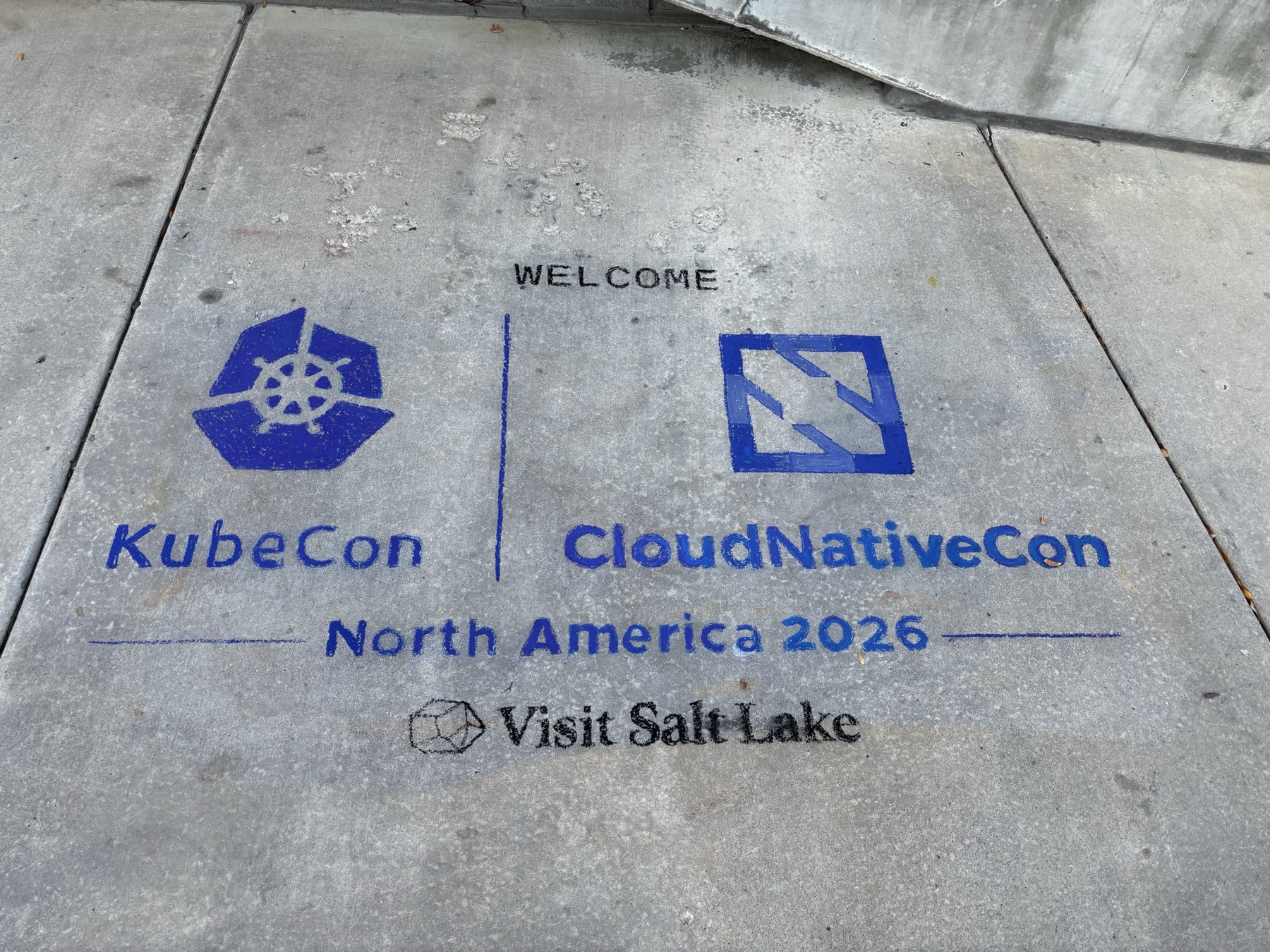
It has been just over a week since KubeCon + CloudNativeCon North America 2026 wrapped up in Salt Lake City, and it was an exciting, busy week for the Cadence project. Across five sessions, we talked about agentic workflows, the pitfalls teams run into when taking them to production, and how Cadence helps. We also spent plenty of time listening to how other projects and companies are tackling similar problems. Along the way, we shared new subprojects that help engineers build workflows and strengthen their distributed services, introduced our Adopter Program, and previewed upcoming community meetups. This post reflects on our experience and the impressions we brought home from KubeCon NA 2026.
Cadence Sessions
Secure Your Agents in 5 Minutes: Durable Execution with Cadence
Diana Zawadzki introduced how durable execution addresses common failures in AI agent workflows. Model calls fail, tools time out, workers restart, and human approvals can take hours. The lightning talk covered how Cadence preserves workflow state and provides retries, timeouts, recovery, and human checkpoints, helping developers build agents that can continue making progress through interruptions.
Agents Fail. Workflows Recover. Durable Agent Orchestration with Cadence
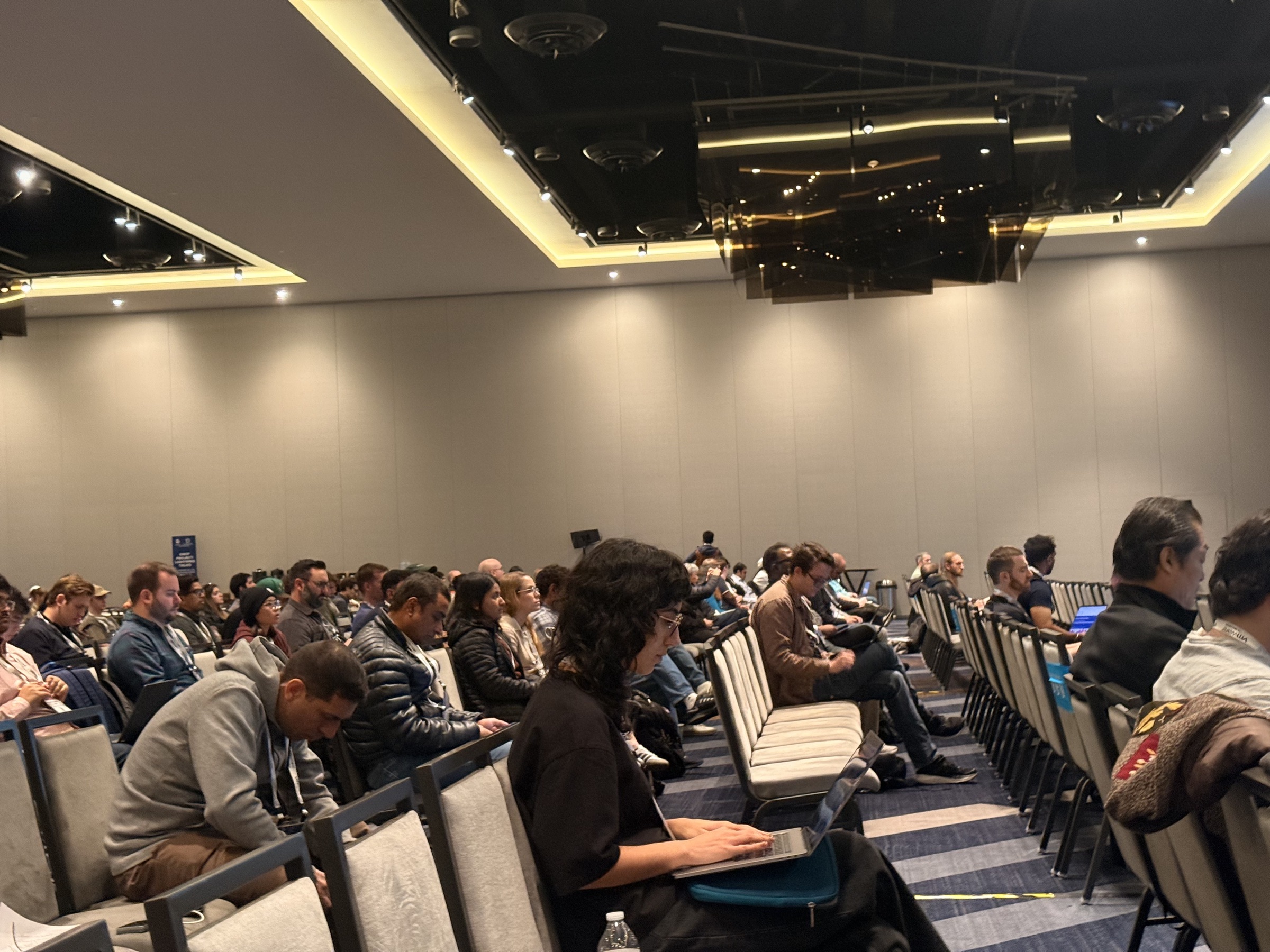
Diana Zawadzki and Shijie Sheng showed how familiar workflow patterns make agents more reliable. In an on-call analyzer demo, they retried rate-limited requests, guarded against repeated lookups, added human review, and stopped the worker. Cadence preserved completed model and tool results so the same run could resume after an interruption or wait for guidance without starting over.
The production example was Uber®’s Agent Execution Service (AES), which uses Cadence for background and scheduled agent tasks, with contributions from the Michelangelo team. Inspecting execution histories and agent inputs and outputs helped narrow a production timeout anomaly to one worker pool. A later 30-day snapshot recorded no failed or timed-out analyzer runs.
Agents fail. Cadence recovers workflows. Explore the on-call example.
Splitting the Monolith at Cloudera®: Building Fault-Tolerant Workflows with Cadence
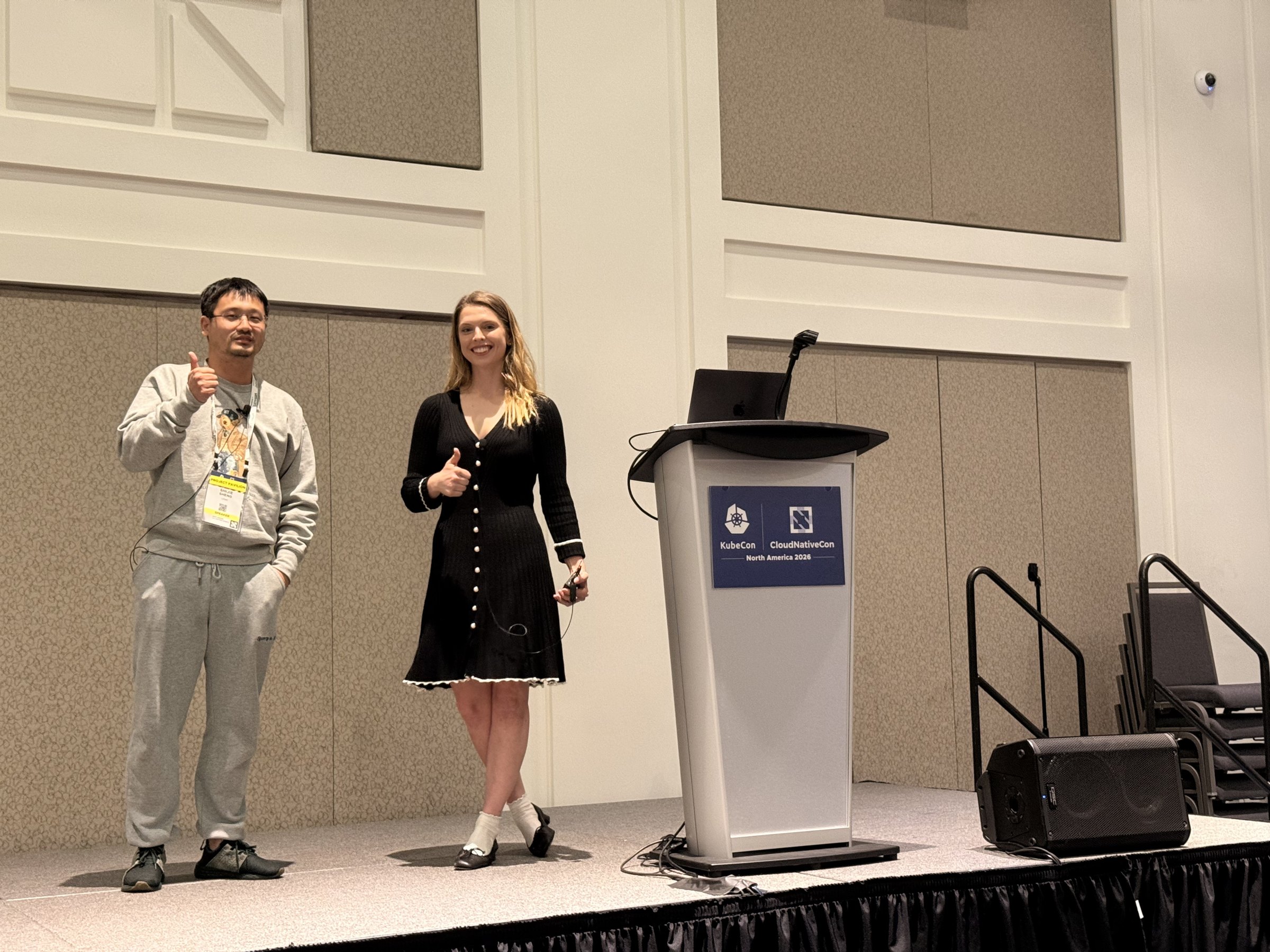
Soma Koltai and Ender Demirkaya shared Cloudera’s migration from a monolithic executor to Cadence for long-running provisioning operations. The session covered the Lease API for distributed locking and an intermediary Async Executor that enabled an incremental transition. The case study described how user workloads kept running through a severe memory leak and the node reschedule that followed, demonstrating the practical value of making infrastructure operations recoverable.
Building and Maintaining Production-Ready SDKs with LLMs
Ender Demirkaya and Shijie Sheng presented at Agentics Day: MCP™ + Agents, sharing how the Cadence community is applying LLMs to SDK development and maintenance across programming languages. The session covered a pipeline that transforms an existing SDK into a language-agnostic representation, adds semantic metadata, and applies language-specific rules to generate SDKs for target languages. Most of the process runs locally and can produce a new SDK in hours. The talk explored the architecture, implementation challenges, and lessons learned while preserving API consistency and each language’s conventions.
Cadence Workflow ContribFest: Build Durable AI Agent Examples
Diana Zawadzki and Shijie Sheng led a hands-on session focused on building and improving durable AI workflow examples. The introductory Incident Triage exercise brought together unreliable APIs, model calls, and human decisions, with participants inspecting execution in Cadence Web and adjusting a retry policy. The session offered opportunities to extend examples, bring new workflow ideas, and contribute with maintainer guidance. Explore the ContribFest guide to continue contributing.
Cadence at the Project Pavilion Kiosk
Thank you to everyone who stopped by our kiosk at the Project Pavilion to meet the team, ask questions, and share what you’re building. Within just four hours of kiosk time, we had only four flyers left!
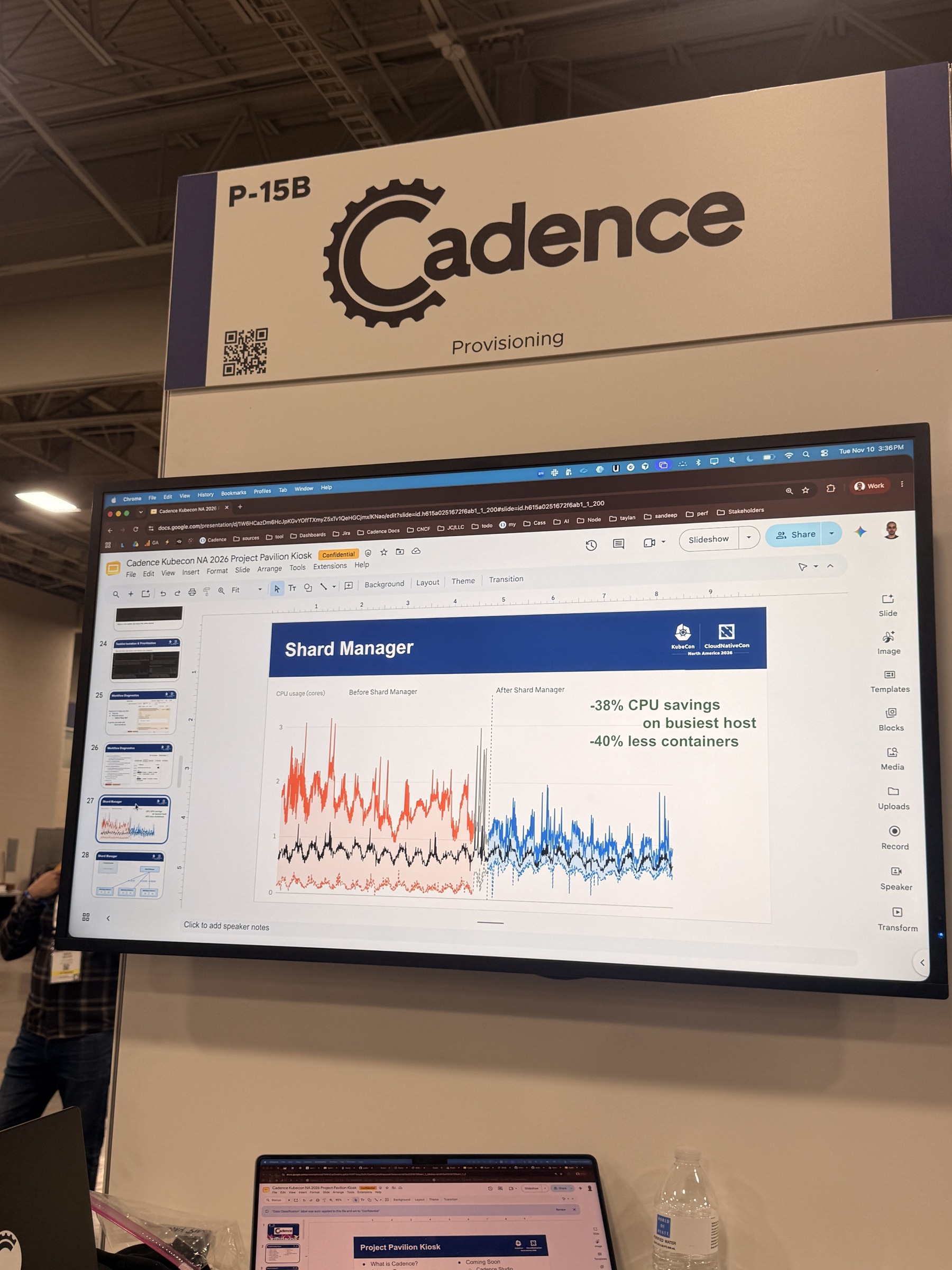
Thank you for the conversations, feedback, and interest in what’s next for Cadence.
Announcements
Shard Manager
Our recent Shard Manager announcement brings work developed for Cadence to a broader set of distributed systems. Shard Manager is a standalone, general-purpose service that teams can use without adopting Cadence. It balances shards by observed load and provides a central view of ownership and placement, along with controls for draining hosts or individual shards.
In Uber’s Cadence Matching rollout, load-aware placement reduced CPU utilization on the hottest host by 38%. Read the design and production results to learn more.
Workflow Home Pages
Workflow Home Pages lets developers define a custom interface directly inside Cadence Web using Markdown and interactive controls. A workflow’s home page can display its current state, collect input, provide approval and rejection buttons, start new workflows, and list related executions.
For suitable use cases, this can mean one less service to build, deploy, and maintain. The workflow defines how work progresses, while its home page gives people a place to understand that progress and take action.
Cadence Adopter Program
The Cadence Adopter Program offers free, direct maintainer assistance to teams bringing Cadence into production. Maintainers help with deployment, configuration, capacity planning, and provisioning blockers, working alongside adopters until their clusters are successfully provisioned.
Assistance is offered first come, first served, subject to maintainer availability. Teams provide and operate their infrastructure, while maintainers contribute their time and experience. The collaboration also helps us improve documentation, automation, and the deployment experience for future adopters.
Community Meetups
Our recent meetup with Seattle Systems reached capacity, bringing the community together for practical discussions about reliable AI systems. Kevin Burns demonstrated how classifiers, local agents, and other components can work together inside durable workflows, using examples from the Cadence AI Samples repository. Thank you to Seattle Systems and Sitesh Pattanaik for hosting, and to everyone who joined.
Upcoming Subprojects
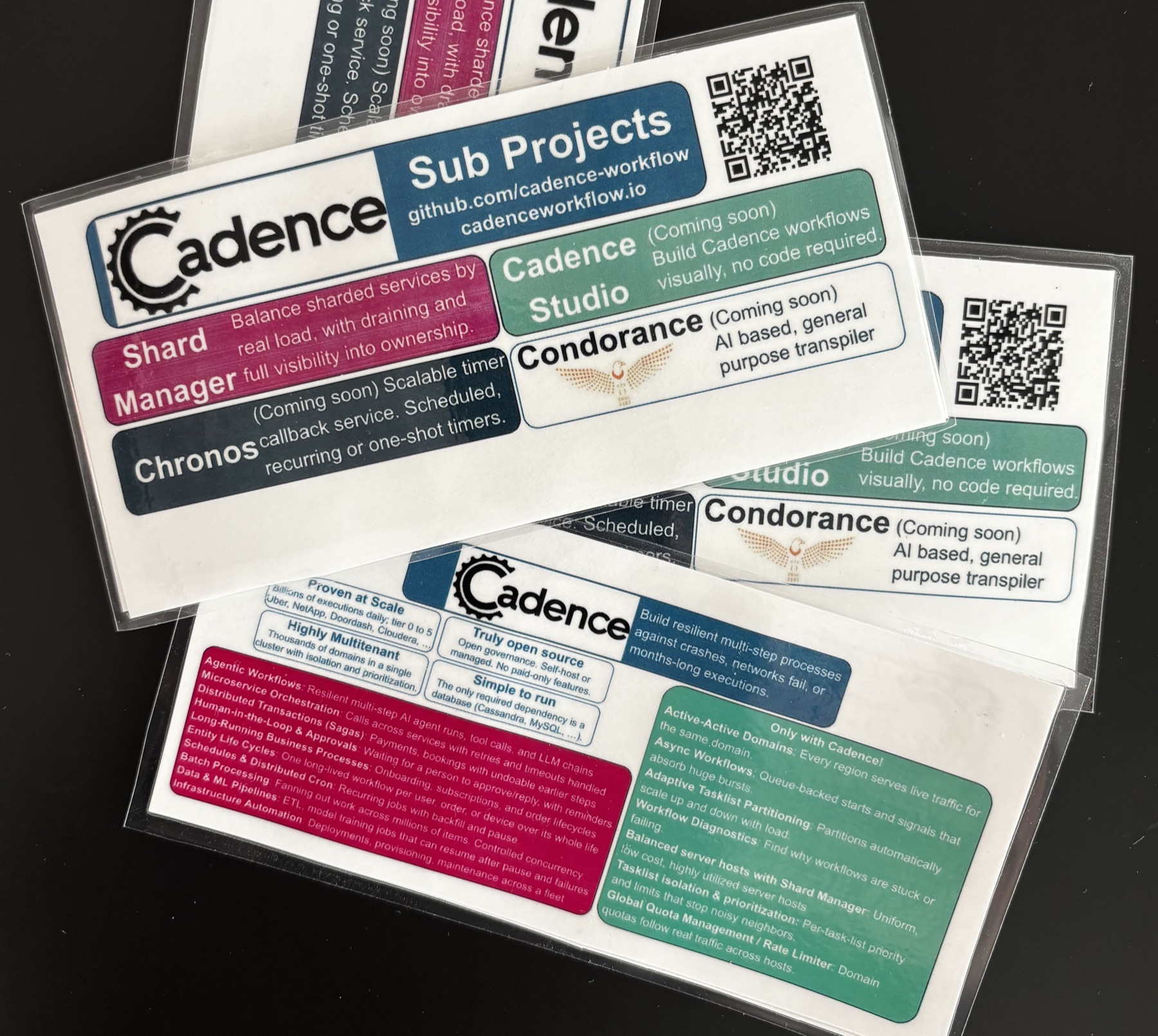
We shared a preview and demo of three subprojects coming soon:
- Chronos: A lightweight timer callback service operating at a high scale and low cost. Timers can be one-shot, recurring, or based on a cron schedule.
- Condorance: A pipeline that turns an existing SDK into a language-agnostic representation, adds semantic metadata, and applies language-specific rules to generate SDKs for other languages, as described in Building and Maintaining Production-Ready SDKs with LLMs.
- Cadence Studio: A UI for building workflows, with a predefined, extendable standard for calling long-running operations without a central gateway.
We are excited to release them soon to support our community.
What we learned
Across the conference program, a common theme emerged: AI adoption is making familiar engineering concerns more urgent. Security, recovery, observability, cost, and developer experience all matter when moving from an experiment to a system people depend on.
Responsible AI requires controls throughout execution
As AI use matures, responsible adoption requires clear boundaries around what agents can do. Isolation, governance, security, and accountability need to work alongside recovery, human control, observability, and consistent policy enforcement. These capabilities belong throughout the execution lifecycle, from the initial request to the final action.
Identity and permissions must follow the work
An agent’s permissions should reflect its task, the person it represents, and the systems it needs to reach. Those permissions may change while the agent is running. Long-running workflows need to respect updated access rules, preserve the chain of responsibility, and make it possible to understand who authorized each action.
Efficiency should be measured against completed work
The cost of an AI application includes model calls, idle infrastructure, repeated operations, storage, and observability. Measuring cost per reliably completed task gives teams a more useful view of efficiency. It also encourages designs that preserve progress, avoid unnecessary calls, and release resources while waiting.
Open standards need consistent behavior
Supporting the same protocol or data format is a starting point. Practical interoperability also depends on consistent semantics, clear compatibility expectations, and useful context across components. Teams benefit when they can change models, tools, or infrastructure without rebuilding their application’s operational foundations.
Governance needs a good developer experience
Controls are easier to adopt when developers understand them. Clear feedback, usable defaults, actionable error messages, and straightforward onboarding help teams work within established boundaries. Good tooling makes responsible development easier to practice every day.
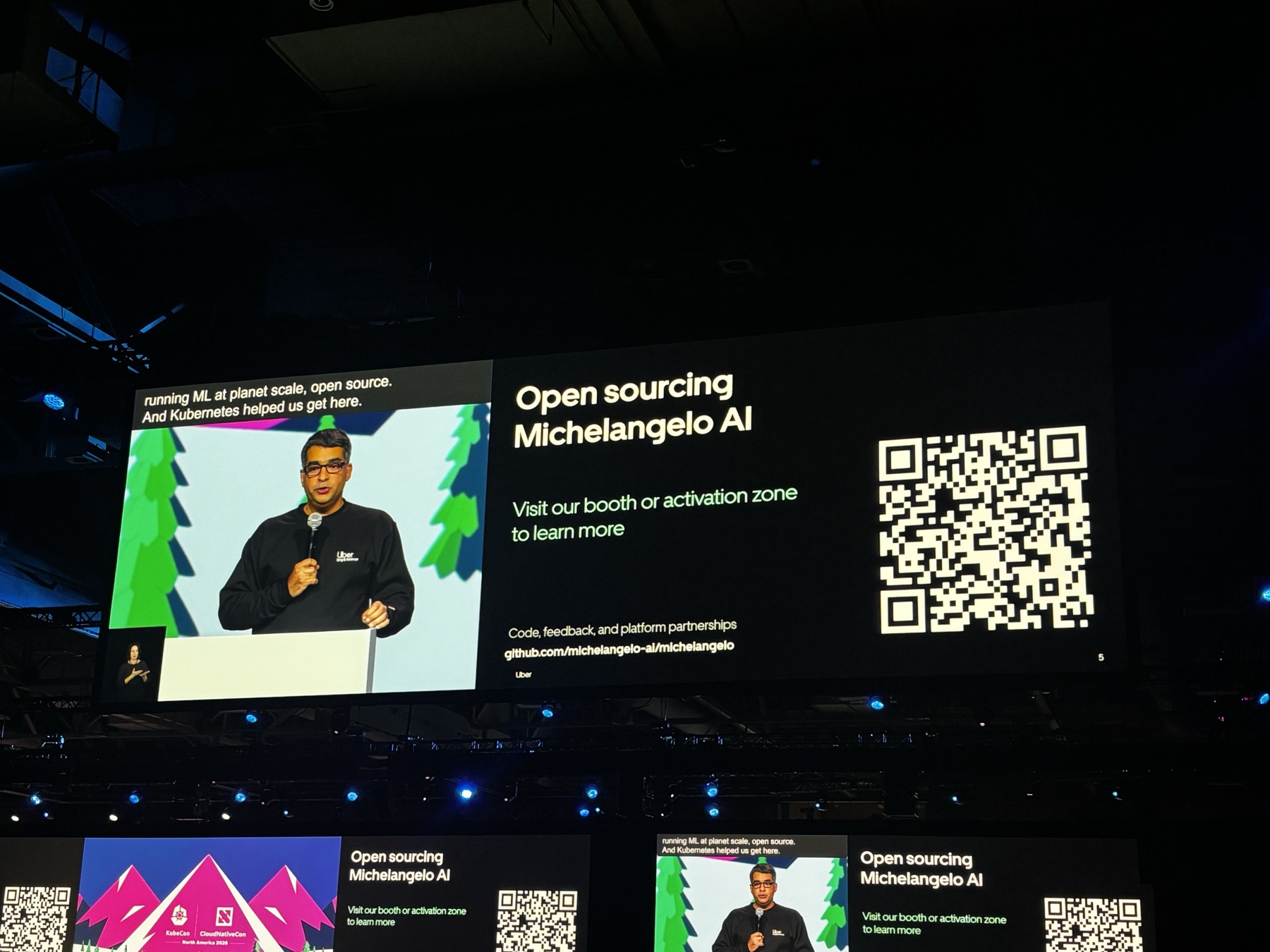
Uber open sourced Michelangelo AI
Uber announced the open sourcing of Michelangelo AI, its platform for building, deploying, and managing machine learning models. It brings together data preparation, training, evaluation, deployment, and monitoring, drawing on years of production experience at Uber. Making that work available gives other teams a foundation for building ML infrastructure and an opportunity to contribute their own experience.
Kubernetes® is adapting to new kinds of workloads
AI is pushing Kubernetes beyond the assumptions of conventional services. Agent Substrate™ addresses the execution and isolation needs of agents, while projects such as KubeRay and OpenRL™ support distributed computing and reinforcement learning. These developments show the community extending Kubernetes to handle workloads with different lifecycles, resource requirements, and failure patterns.
GPU efficiency is driving changes in scheduling
Running AI efficiently involves more than adding accelerators. Workloads need the right hardware, networking, placement, and sharing policies. Dynamic Resource Allocation allows applications to describe their hardware requirements more precisely, and managed implementations are bringing those capabilities into wider use. The interesting shift is toward scheduling based on workload needs and hardware capabilities, with utilization and operational cost shaping the design.
Platform engineering is delivering measurable improvements
Meta® shared how it brought routine application deployments down from more than four hours to minutes. Previously, application updates ran through a monolithic Terraform® pipeline, where one stalled application could block unrelated releases. The team kept Terraform for infrastructure provisioning and moved application delivery to Argo® CD and Kargo, giving applications independent promotion processes and health checks, as described in the CNCF® announcement.
What made the approach interesting was how they integrated it with Meta’s existing systems. Developers provide a short application definition, and the platform generates the deployment configuration. Selected internal configuration and infrastructure data flow into Git through one-way synchronization. Kargo writes a complete desired-release record into Git, which Argo CD reconciles against the cluster, making releases easier to trace and reconstruct. The takeaway is how much value comes from removing dependencies between unrelated deployments while keeping the developer interface simple.
Observability is evolving in two directions
Teams are building observability for AI applications while also applying AI to investigate distributed systems. Jaeger™ previewed experimental capabilities for natural-language troubleshooting, MCP tools, and visualization of generative AI traces. This creates useful possibilities for understanding complex executions, while keeping the underlying evidence accessible to engineers who need to verify an explanation.
Safer operations are becoming part of the platform
Fleet management, drift detection, and automated upgrade checks showed continued investment in everyday operational reliability. Microsoft®’s announcements included controls for managing workloads across clusters and health gates that stop upgrades from progressing when conditions deteriorate. Our takeaway is that platforms become more useful when operational knowledge moves from manual procedures into repeatable, observable controls.
What’s next
Thank you to our speakers, adopters, contributors, and everyone who connected with Cadence at KubeCon. Try an example, bring your use case, or help us build the next one.
We’re planning more meetups, regular contributor office hours, and hackathons across the Bay Area, Seattle, and Denmark. We want to help people become Cadence contributors by working directly with maintainers on what the project needs, with support from their first contribution through ongoing ownership.
Trademark notices
Agent Substrate™, MCP™, and OpenRL™ are trademarks of LF Projects, LLC.
Argo®, CloudNativeCon®, KubeCon®, Kubernetes®, and their logos are registered trademarks of The Linux Foundation® in the United States and other countries. No endorsement by The Linux Foundation is implied by the use of these marks.
CNCF® and the CNCF logo design are registered trademarks of the Cloud Native Computing Foundation.
Jaeger™ is a trademark of The Linux Foundation.
Cloudera® is a trademark of Cloudera, Inc. Meta® is a trademark of Meta Platforms, Inc. Microsoft® is a trademark of Microsoft Corporation. Terraform® is a trademark of International Business Machines Corporation. Uber® is a trademark of Uber Technologies, Inc.